

Hear from Our Customers

Most lawns in Smithtown don’t struggle because the homeowner isn’t paying attention. They struggle because the program treating them was designed for somewhere else. Sandy, loamy North Shore soil drains fast nutrients leach below the root zone before the grass can absorb them, and a fertilizer built for average American soil isn’t going to fix that. When the product going down actually matches the ground it’s going into, the results are different. Not marginally different. Visibly, noticeably different.
The oak canopy that covers a lot of Smithtown’s established neighborhoods adds another layer to this. Dense shade stresses cool-season turf, and shaded areas need different seed varieties, different rates, and different timing than the full-sun sections of the same yard. A program that doesn’t account for that is going to keep producing the same thin, struggling patches no matter how many seasons you run it.
Then there’s grub pressure. Smithtown sits near the wooded corridors of Sunken Meadow State Park and Caleb Smith State Park, and those areas support high Japanese beetle populations every summer. Grubs feed on root systems underground by the time you see the dead patches peeling back from the soil, the damage is already done. A program built for this area includes preventive grub control before that happens, not a repair conversation after.
We’ve been treating lawns in Suffolk County since 1987, with deep roots throughout Smithtown and the surrounding North Shore communities. That’s not a number thrown in to sound established it means our team has worked through every drought cycle, every grub outbreak, and every regulatory change this region has seen. We know Smithtown soil the way you only can after decades of working in it.
Every job is handled by a licensed NYS DEC pesticide professional. Not a labor crew following a checklist someone with the training, the certification, and the field experience to read what’s actually happening on your property and respond to it. If you’ve driven through Smithtown’s neighborhoods along Route 25A or past the Nissequogue River corridor, you’ve likely already seen one of our five wrapped trucks on the road. We’re not a call center operation running routes from three counties away. We’re here, consistently, in your area.
The custom-blended fertilizer we use is made specifically for our programs and for Long Island’s soil conditions. No competitor in Smithtown is doing that. It’s a real, concrete difference and it shows up in how lawns perform season over season.
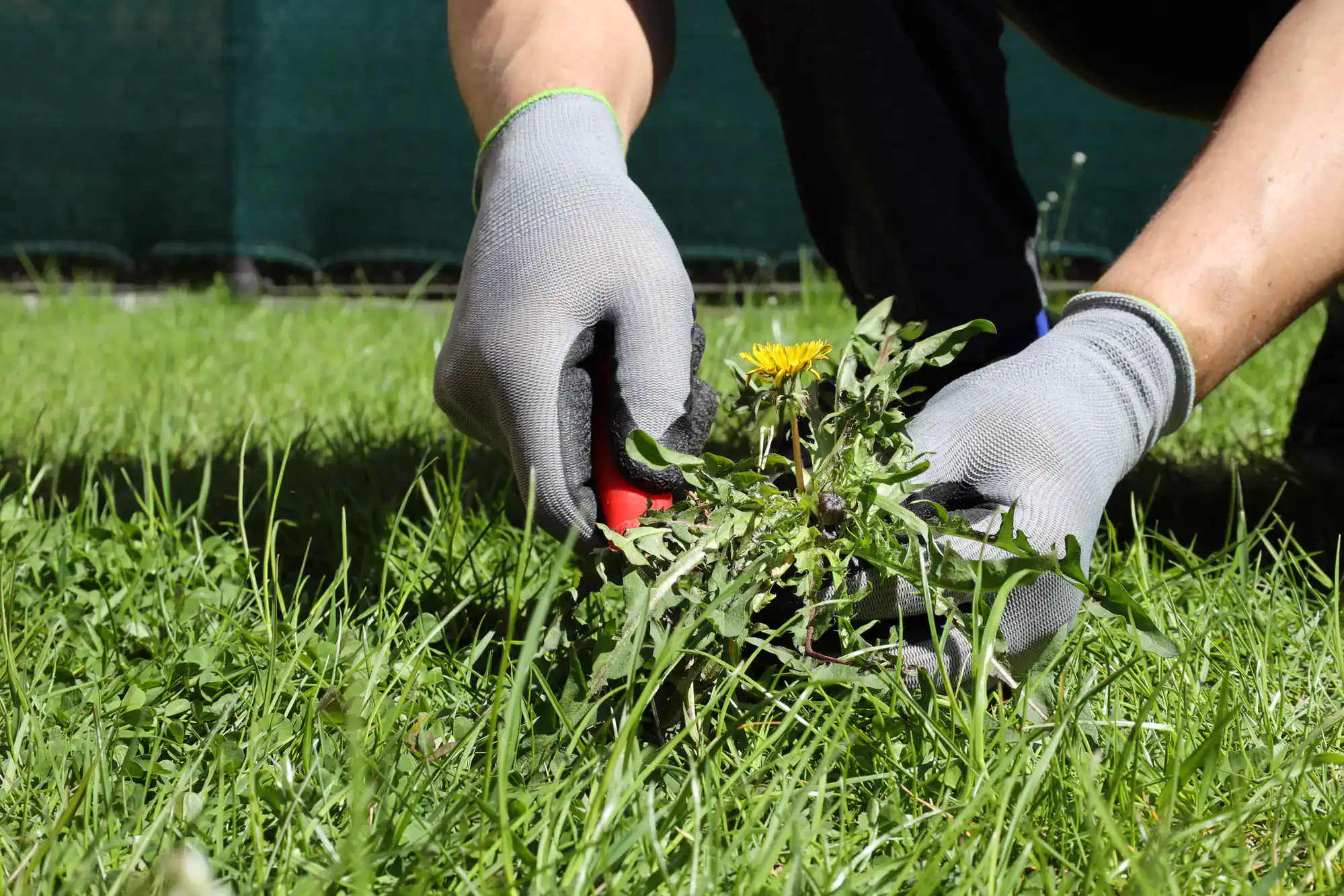
It starts with an actual assessment of your property. Sun exposure, soil conditions, existing turf, problem areas, proximity to sensitive waterways all of it matters, and all of it shapes the program. Smithtown’s position within the Nissequogue River watershed means fertilizer timing and rates need to be managed carefully. Suffolk County law prohibits nitrogen and phosphorus applications between November 1st and April 1st, with fines up to $1,000 per violation. That’s not a detail we overlook it’s built into the program from the start.
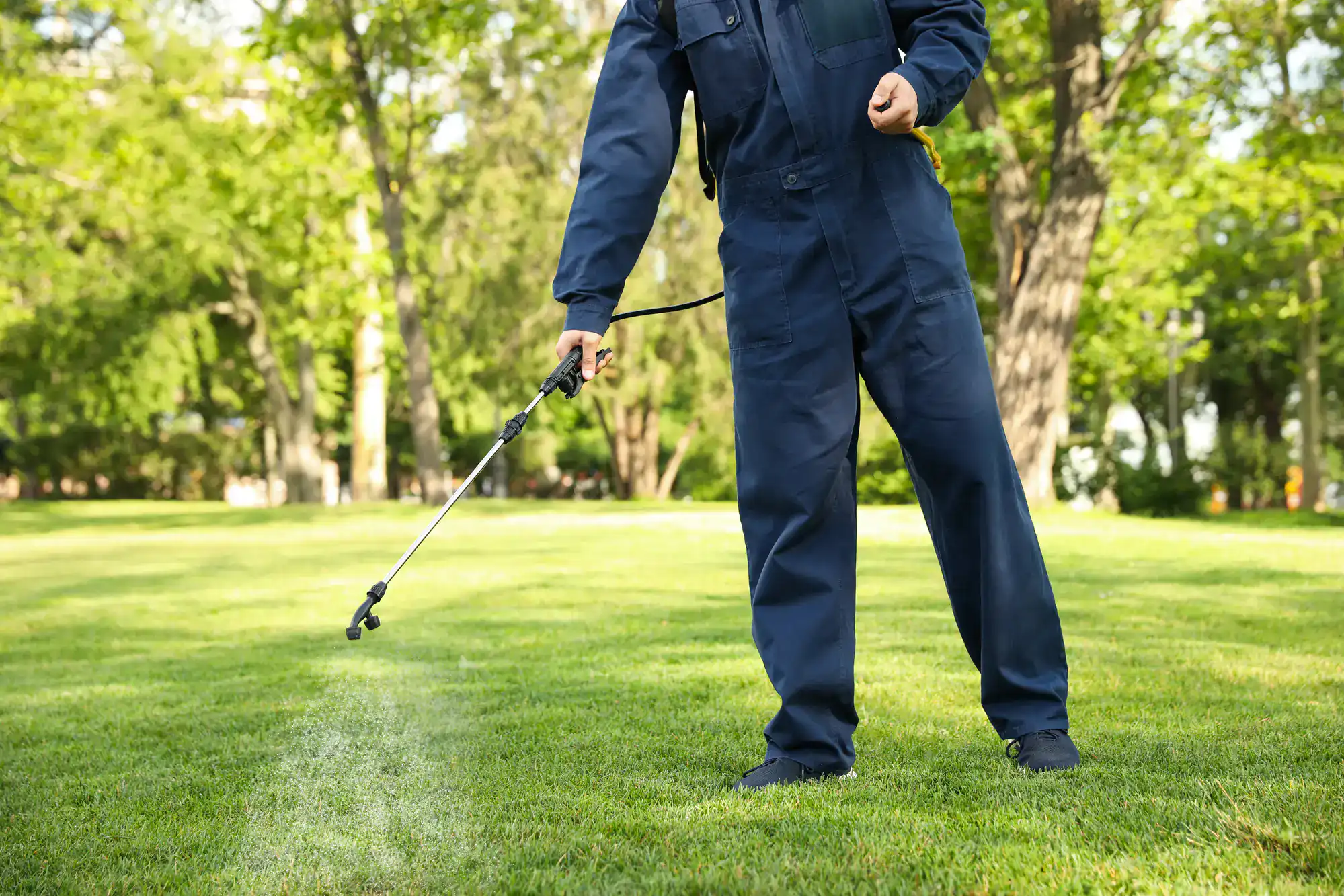
Once the program is set, applications go down on a scheduled cadence through the season. The spring treatments focus on feeding the root system coming out of dormancy and getting ahead of early weed pressure. Summer applications manage heat stress and pest activity including preventive grub control timed to the Japanese beetle’s life cycle, which matters specifically in areas bordering the wooded parks in and around Smithtown. Fall is where the most important work happens: aeration with hydraulic equipment that actually penetrates compacted Long Island turf, overseeding with varieties matched to your lawn’s specific conditions, and a late-season winterizer applied before the November 1st blackout window.
The last application of the year is the one most programs get wrong either skipped, mistimed, or applied after the legal cutoff. Done right, it feeds the root system through dormancy and sets up the green-up you’ll see in April. That’s what a program built around this area actually looks like from start to finish.
Ready to get started?
Every program we put together is built around the specific property not a tiered package pulled off a shelf. That means the fertilizer rates, the product selection, the timing, and the treatment sequence are all shaped by what’s actually going on with your lawn. The custom-blended fertilizer used in every program is formulated specifically for us and for Long Island’s soil conditions. That’s not marketing language. It’s a product that doesn’t exist anywhere else, applied by people who understand why it matters here.
Aeration is done with hydraulic aerators not the lightweight drum equipment you’d rent at a hardware store. On Smithtown’s compacted suburban soils, the difference in core penetration is significant, and that penetration is what determines whether the overseeding that follows actually takes. Lawn restoration and new lawn installs from seed are also available for properties that are past the point where a maintenance program makes sense on its own. If a previous grub infestation, years of a generic program, or a neglected property has left your lawn in rough shape, that’s a starting point we’ve worked from many times before across Suffolk County.
Weed control, disease management, and grub prevention are all part of the conversation not add-ons to negotiate. And for Smithtown homeowners who are on the LIRR most mornings and don’t have time to manage paperwork, online credit card payment is available. The goal is a program that runs cleanly in the background while your lawn actually improves.
The most common reason is that the fertilizer program isn’t matched to the soil it’s being applied to. Smithtown’s North Shore soils are sandy and loamy they drain quickly, which means nutrients can leach below the root zone before the grass plant absorbs them. A standard fertilizer product formulated for average American soils isn’t designed to account for that drainage rate, so even a consistent application schedule can underdeliver on results.
The other factor worth looking at is shade. If your lawn sits under mature oaks which are common throughout Smithtown’s established neighborhoods those shaded areas need different grass varieties and different application rates than the full-sun sections of your yard. Treating the whole lawn the same way is one of the most consistent mistakes generic programs make. A program built around your property’s actual conditions, including soil type and sun exposure, produces a fundamentally different outcome than one built around averages.
The biggest practical difference is product access and timing precision. Consumer fertilizers available at hardware stores are formulated for broad application across a wide range of soil types they’re not designed for Long Island’s sandy, fast-draining North Shore soils. A professional program uses products calibrated for the specific conditions of your lawn, applied at the right rates and at the right points in the growing season.
Timing is also where DIY programs most often break down. Suffolk County’s fertilizer blackout period runs from November 1st through April 1st, with fines up to $1,000 per violation and the last application before that window closes is actually the most important one of the year. Getting it wrong means either missing the window entirely or applying after the legal cutoff. We manage that timing automatically, along with the specific application buffers required near waterways like the Nissequogue River that runs through Smithtown.
Grub damage typically shows up in late summer or early fall as irregular patches of dead or dying grass that feel spongy underfoot and peel back from the soil like a loose carpet. That’s because Japanese beetle grubs have been feeding on the root system underground by the time the surface damage is visible, the roots are already gone. The patches tend to expand quickly once they appear, and they often attract birds and skunks digging for the grubs, which adds to the surface damage.
Smithtown’s proximity to Sunken Meadow State Park and Caleb Smith State Park means the surrounding residential neighborhoods see elevated Japanese beetle adult populations each summer, which translates to higher grub pressure in nearby lawns. The only reliable approach is preventive grub control applied at the right point in the beetle’s life cycle typically early to mid-summer before the eggs hatch and the larvae begin feeding. Reactive treatments after the damage is visible are far less effective and don’t undo the root destruction that’s already occurred. If you’re seeing the signs now, a lawn restoration program may be needed alongside any grub treatment.
For Smithtown and the surrounding North Shore communities, the fall window roughly late August through mid-October is the most effective time for aeration and overseeding. Soil temperatures are still warm enough to support germination, but the air has cooled enough that newly germinated seedlings aren’t fighting summer heat stress. That combination gives new grass the best possible start before winter dormancy sets in.
What matters as much as timing is the equipment used. Lightweight drum aerators, the kind available at equipment rental stores, often don’t penetrate deeply enough into compacted Long Island turf to make a meaningful difference. Hydraulic aerators deliver deeper, more consistent core penetration and on Smithtown’s suburban soils, where decades of foot traffic and heavy equipment have compressed the root zone in many established neighborhoods, that depth is what determines whether the overseeding actually establishes or just sits on the surface. Seed selection also matters: the variety needs to match your lawn’s specific conditions, including how much shade it’s dealing with, which varies significantly across Smithtown’s different neighborhoods and incorporated villages.
TruGreen operates out of a Hauppauge location and does serve Smithtown so coverage isn’t the issue. The pattern that comes up consistently in reviews from Suffolk County homeowners is reliability and program quality. Large national franchises stretch their technician capacity across wide service areas, which often means rotating crews who don’t know the history of your property, treatments that get skipped or rescheduled without notice, and customer service that routes to a national call center rather than someone who has ever seen your lawn.
The program quality concern is also real. A national franchise applies a standardized program across a broad geography it’s not designed around the specific soil conditions of Long Island’s North Shore or the regulatory requirements tied to sensitive waterways like the Nissequogue River. We’ve been operating in Suffolk County since 1987, use a custom-blended fertilizer formulated for Long Island soils, and send licensed NYS DEC pesticide professionals to every job. That’s a fundamentally different level of service. The comparison isn’t really about price it’s about whether the program is built for your lawn or built for the average lawn somewhere in the country.
Yes and it’s a significant part of what we do across Suffolk County. Not every lawn starts from a decent baseline. New homeowners in Smithtown frequently inherit whatever condition the previous owner left behind, which can range from thin and weedy to genuinely damaged from untreated grub infestations or years of a program that never addressed the underlying soil conditions. Those aren’t situations where a standard maintenance program is the right starting point.
We offer complete lawn restoration and new lawn installs from seed not just ongoing maintenance for lawns that are already performing reasonably well. The process starts with an honest assessment of what’s actually going on: soil condition, existing turf coverage, damage patterns, compaction level, and what it’s going to take to get the lawn to a point where a maintenance program can sustain it. Given Smithtown’s property values median home values approaching $700,000 in many parts of town the lawn is a meaningful part of the asset. A restoration program that actually works is a better investment than another season of a generic program that keeps producing the same result.
Useful Links
Other Services we provide in Smithtown