
Hear from Our Customers
If you’ve been reseeding the same bare patches every September and watching them fail again by the following July, the problem isn’t your seed it’s what’s living in your soil. Active fungal disease, whether brown patch, dollar spot, or red thread, will destroy new growth before it ever has a chance to establish. Treating the disease first is the only way your investment in fall reseeding actually holds.
St. James sits just a few miles south of Long Island Sound, and that matters more than most homeowners realize. Maritime air from the Sound pushes elevated humidity inland through the summer months. When nighttime temperatures climb above 70°F and humidity stays high which happens reliably in St. James from late June through August brown patch becomes an active, fast-moving threat to every cool-season lawn in the hamlet. That’s not a generic Long Island problem. It’s a North Shore problem, and it’s predictable enough to treat preventatively if you know what to look for.
The mature tree canopy that gives St. James its character also works against your lawn. Those established oaks and maples along the streets off North Country Road reduce airflow, extend the time your grass stays wet after rain, and create the kind of shaded, humid microenvironments where fungal disease thrives through the night. No amount of adjusted watering fixes that. Targeted fungicide treatment timed to the specific disease window and matched to the actual pathogen is what stops the cycle.
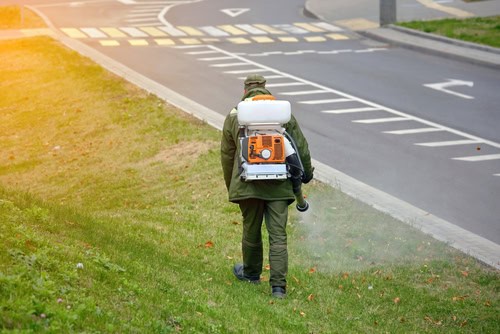
Lawn Master of Suffolk is a New York State DEC licensed commercial pesticide applicator serving St. James and the surrounding North Shore communities. That license isn’t a marketing checkbox in New York State, it’s the legal requirement that separates a qualified professional from anyone else showing up with a backpack sprayer. Passing the NYSDEC certification exams, meeting the experience requirements, and maintaining continuing education every three years is what earns that credential. It’s also what gives us legal access to restricted-use fungicide products that aren’t available at any garden center or big-box store the same professional-grade formulations used on golf courses and university athletic fields.
We’re based in Port Jefferson Station and work throughout the North Shore corridor the same Route 25A communities, the same sandy loam soils, the same humid summers that St. James homeowners deal with every year. This isn’t a national franchise routing calls through a regional hub. We’re a local Suffolk County operation that knows this area because we work here.
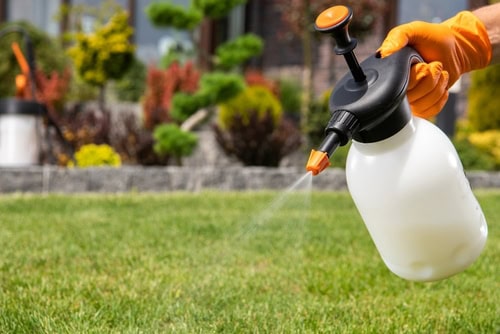
The first thing we do is look at your lawn actually look at it. Brown patch, dollar spot, and red thread don’t all look the same, and they don’t respond to the same chemistry. Misidentifying the disease is one of the most common reasons store-bought fungicide programs fail. Before any product is selected, the visible symptoms, the turf species, the soil conditions, and the environmental context are all factored into the diagnosis. In St. James, that means accounting for the canopy cover, the proximity to the Sound, and whether the lawn has a history of recurring disease in the same areas.
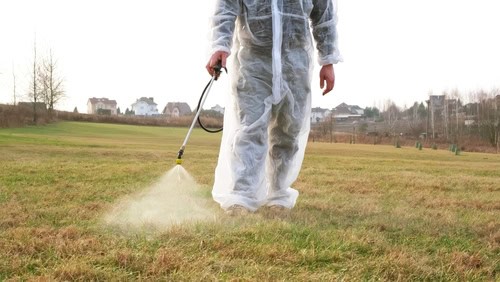
Once the disease is confirmed, we select the right fungicide and apply it at the correct rate and timing. For lawns with a documented history of brown patch or dollar spot, a preventative program is often the smarter approach timed to the environmental conditions that precede the outbreak, not after the damage is already visible. We also rotate fungicide chemistries across the season, alternating between chemical classes like triazoles and strobilurins, which prevents resistance from building up over time. That’s standard practice on professional turf. It’s rarely done correctly in DIY programs.
After every application, you receive written documentation of what was applied, at what rate, and under what conditions. New York State requires this of licensed commercial applicators, and it matters in a county where the drinking water comes from the ground. Suffolk County’s sole-source aquifer sits beneath all of Long Island, and every application we make is done in full compliance with NYSDEC and county environmental guidelines.
Ready to get started?
The three fungal diseases most common on Long Island’s cool-season lawns each have a distinct profile, and each requires a different approach. Brown patch is the dominant summer threat in St. James it activates in hot, humid conditions and can spread across a lawn in days when nighttime temperatures stay above 70°F. Dollar spot is most active in drought-stressed, low-nitrogen turf and tends to hit hardest in the sandy loam soils typical of the North Shore. Red thread shows up in spring and early fall when temperatures cool to the 60–75°F range and nitrogen is running low it spreads quickly and is often the first disease St. James homeowners notice after a wet April.
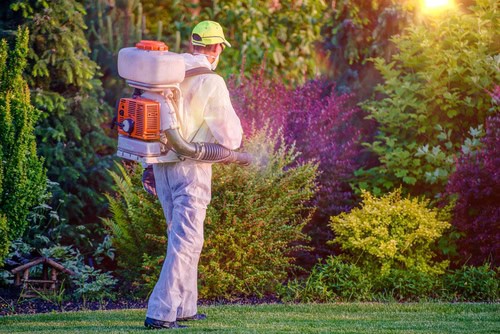
What makes professional fungicide treatment different from anything you can do yourself isn’t just the products it’s the protocol. We use professional-grade formulations of active ingredients like azoxystrobin and propiconazole, applied at correct rates, at the right point in the disease cycle, with chemistry rotated to prevent resistance. Over-the-counter products are consumer-grade dilutions that often can’t match the efficacy needed to stop an active outbreak on an established North Shore lawn.
For homeowners along the historic streets near Deepwells Farm or in the established neighborhoods south of Route 25A, the goal is simple: a healthy lawn that doesn’t keep failing in the same spots year after year. That’s what a diagnosis-first, licensed fungicide program actually delivers.
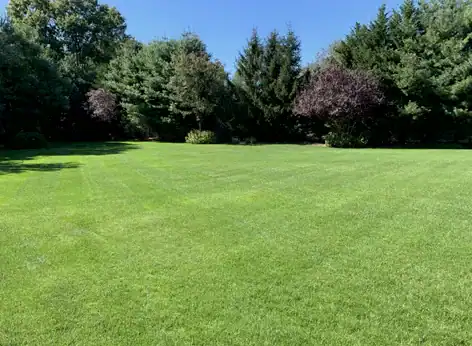
The symptoms can look similar at first brown, thinning, or dead patches but the patterns are different once you know what to look for. Drought stress tends to affect the lawn more uniformly, especially in the most exposed, sun-baked areas. Fungal disease, on the other hand, tends to show up in irregular circular or irregular-edged patches, often in the same locations year after year. Brown patch, for example, leaves a characteristic smoke ring border around the affected area when conditions are right. Dollar spot creates small, silver-dollar-sized dead spots scattered across the turf rather than one large area.
In St. James specifically, the combination of sandy loam soils and summer humidity off Long Island Sound means both drought stress and fungal disease can be present at the same time which is part of why DIY diagnosis often misses the mark. If you’re seeing recurring dead areas in the same spots each summer, especially under tree canopy or in low-airflow areas, fungal disease is the more likely culprit. A proper on-site diagnosis is the only way to confirm it.
There are two main reasons. The first is product strength consumer-grade fungicides sold at garden centers are diluted formulations compared to what licensed commercial applicators use. The active ingredients may be the same, but the concentration and efficacy are not. The second reason is chemistry mismatch. Brown patch, dollar spot, and red thread respond to different fungicide classes. If you’re applying a product labeled for general lawn disease without knowing which specific pathogen is present, there’s a real chance you’re using the wrong chemistry entirely.
Licensed commercial applicators like us have access to restricted-use products that are simply not available for retail purchase in New York State. These are the same formulations used on golf courses and professional athletic fields and they’re restricted precisely because they require certified training to use correctly. If you’ve tried store-bought fungicide more than once and seen the disease come back, the issue isn’t your effort. It’s the product and the protocol.
Timing depends on which disease you’re dealing with and what the current environmental conditions are. For brown patch the most common summer disease in St. James the risk window opens when nighttime temperatures consistently exceed 70°F and humidity stays elevated. On the North Shore, that typically means late June through August, with peak pressure in July. Applying a preventative fungicide before those conditions peak is more effective than waiting until you see symptoms, because by the time the damage is visible, the disease has already been active for days.
Red thread is a different story. It’s a cool-season disease that peaks in spring and early fall, typically when temperatures are between 60 and 75°F and the lawn is nitrogen-deficient coming out of winter. In St. James, that means April and May are the primary red thread window, with a secondary window in September. Dollar spot can be active from late spring through early fall. Our fungicide program accounts for all three timing windows and adjusts based on what’s actually happening in your lawn, not a fixed calendar date.
When applied by a licensed commercial pesticide applicator following NYSDEC guidelines, fungicide treatment is safe for residential properties including areas near gardens and play spaces. The key word is licensed New York State requires certified applicators to select products appropriate for residential use, apply them at label-specified rates, and provide written notice to adjacent property owners before treatment. That neighbor notification requirement exists specifically because accountability matters, and it’s a legal step that unlicensed operators routinely skip.
Suffolk County’s sole-source aquifer designation means every pesticide application in the area is subject to county and state environmental guidelines designed to protect groundwater. We operate in full compliance with those requirements on every visit. After each application, you receive written documentation of the product used, the rate, and the conditions so you always know exactly what was applied to your property. For St. James homeowners with children, pets, or vegetable gardens, that documentation and compliance record is worth asking about before hiring any lawn care provider.
It depends on your lawn’s history, the diseases present, and what kind of program makes sense for your situation. For a lawn that has had brown patch or dollar spot in previous seasons, a preventative program typically involves two to three applications timed to the peak disease windows one before the summer humidity pressure builds, and follow-up applications if conditions remain favorable for disease activity. Curative treatment, applied after symptoms appear, often requires closer-spaced applications to get the disease under control before it spreads further.
For St. James lawns under heavy canopy cover which describes a lot of the established properties along the streets off North Country Road the disease pressure window can be longer because the shaded, low-airflow environment extends the conditions that fungal pathogens need to stay active. That sometimes means an additional application compared to a more open, sun-exposed lawn. The honest answer is that there’s no universal number. We assess each lawn individually and recommend only what’s actually needed based on what’s found during diagnosis not a preset package that gets applied regardless of conditions.
Yes. We serve St. James, NY and the surrounding North Shore communities, including neighborhoods near Stony Brook, Smithtown, and throughout the Route 25A corridor. Our service area covers the full hamlet of St. James within the Town of Smithtown, including established residential streets north and south of North Country Road, properties near Deepwells Farm, and the neighborhoods that border the Stony Brook University area to the east.
If you’re not sure whether your specific address falls within the service area, the easiest thing to do is reach out directly. We’re based in Port Jefferson Station a short distance east along the same North Shore corridor so travel to St. James is straightforward and service scheduling in this area is routine. The proximity also means we’re familiar with the specific microclimatic conditions, soil types, and seasonal disease patterns that affect lawns throughout this part of Suffolk County.
Useful Links
Other Services we provide in St. James